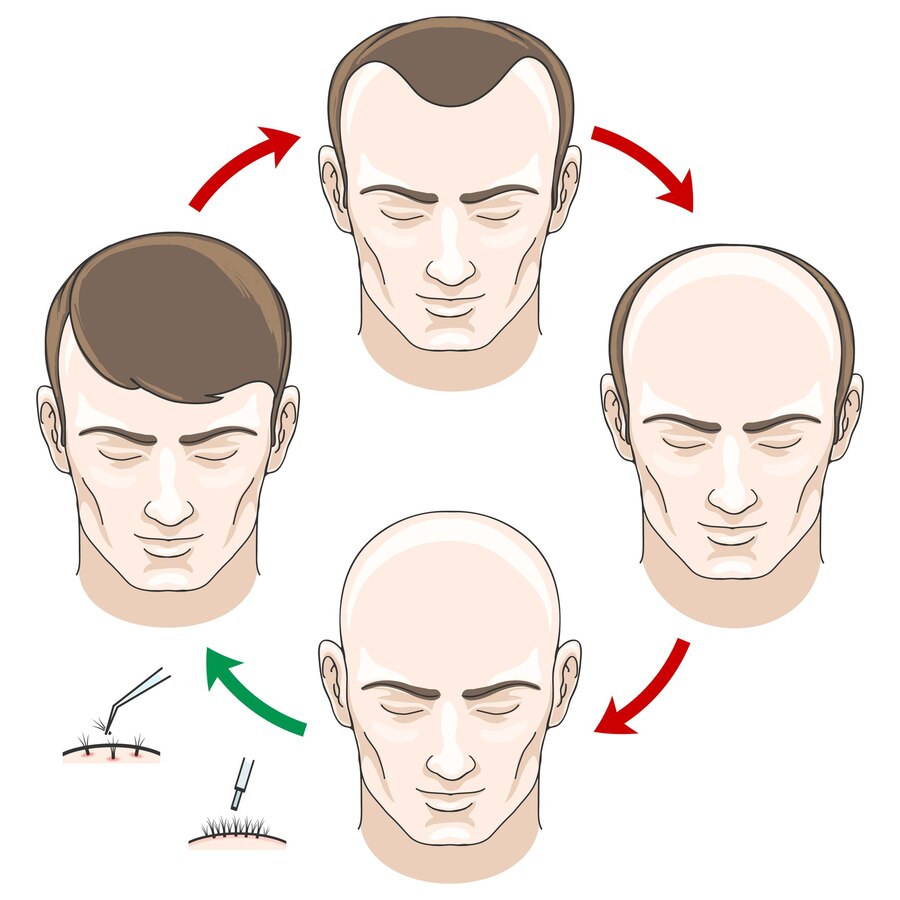
Hair loss can affect much more than appearance. For many people, thinning hair or a receding hairline can change how they feel about their image and confidence. A hair transplant may offer a long-term solution, but successful treatment is not simply about placing as many grafts as possible. The starting point is understanding whether the patient is suitable for surgery.
Turkey has become a popular destination for people considering hair restoration. Modern techniques, experienced medical teams and treatment options for international patients have made the country an important destination for hair restoration. However, choosing treatment based only on the number of grafts offered can lead to unrealistic expectations.
A successful result depends on several factors. These include the pattern of hair loss, donor hair quality, age, future hair loss, scalp health, hair characteristics and the design of the planned restoration. Most importantly, the treatment should match the individual rather than follow a standard package.
Why Patient Suitability Matters Before Treatment
A hair transplant works by moving healthy hair follicles from a donor area to areas affected by thinning or hair loss. The donor supply is not unlimited. Once follicles are removed, they cannot simply be replaced. This is an important point for patients considering a hair transplant in turkey package, as the treatment plan should be based on the patient’s individual donor supply rather than a standard number of grafts.
This makes patient assessment one of the most important stages of the process. A suitable candidate should have enough healthy donor hair to achieve a meaningful improvement while preserving a natural appearance for the future. A detailed consultation can help determine whether the proposed treatment is appropriate and how the available grafts may be used.
A detailed assessment can also help identify the cause and stage of hair loss. Some patients may have stable pattern hair loss, while others may still be experiencing rapid thinning. Treating hair loss without considering its progression can affect the long-term appearance of the result.
More Grafts Do Not Automatically Mean Better Results
It can be tempting to believe that a higher graft number will produce thicker and better-looking hair. In reality, density is only one part of a successful restoration.
The surgeon or medical team needs to consider where each graft will create the greatest visual improvement. Strategic placement can make a significant difference. The frontal hairline, temples, mid-scalp and crown may all require different approaches.
For example, a patient with a receding hairline may benefit more from careful hairline reconstruction than from using a large number of grafts across the entire scalp. Another patient with diffuse thinning may need a different distribution strategy.
The aim should be a balanced and natural result. Using too many grafts in one session can place unnecessary pressure on the donor area and may reduce options for future treatment.
Understanding the Donor Area
The donor area is one of the most valuable resources in hair restoration. It commonly includes the back and sides of the scalp, where hair is often more resistant to pattern hair loss.
However, donor density varies between individuals. Hair thickness, follicle characteristics, scalp condition and the size of the available donor area all influence how many grafts can safely be harvested.
A good assessment should therefore examine donor capacity rather than simply promise a fixed number of grafts.
This is particularly important for younger patients. Someone may have significant hair loss today but could experience further recession or thinning in the years ahead. Preserving donor hair for possible future needs can be more valuable than maximising the first procedure.
Hair Loss Pattern Can Change the Treatment Plan
Not all hair loss looks the same. Some people have a receding frontal hairline. Others have thinning at the crown, widespread diffuse thinning or more advanced hair loss.
The Norwood scale is often used to describe male pattern hair loss, but a clinical assessment goes beyond assigning a stage. The pattern, progression and quality of existing hair should all be considered.
A patient with early-stage recession may need a relatively conservative restoration. Someone with advanced loss may require a broader strategy that takes future hair loss into account.
This is why personalised planning matters. A standard treatment approach may not be suitable for every patient.
What Does Hair Plantation Cost in Turkey Depend On?
Cost is naturally an important consideration for international patients. However, price should be viewed alongside treatment quality, medical assessment and the suitability of the proposed procedure.
The hair plantation cost in Turkey can vary according to several factors. These may include the technique used, the number of grafts required, the complexity of the procedure, the medical team involved and the services included in the treatment.
Patients should also understand what they are actually paying for. A lower advertised price may not necessarily represent better value if important services are excluded.
Rather than asking only about price, patients should ask what the proposed treatment includes and why the recommended number of grafts has been selected.
Looking Beyond a Turkey Hair Transplant Package
International patients may come across a turkey hair transplant package that combines treatment with additional services. Depending on the provider, a package may include accommodation, airport transfers, consultations, medication or aftercare.
Packages can make planning easier, particularly for patients travelling from overseas. However, convenience should not replace proper medical assessment.
Before booking, patients should understand the medical process behind the package. They should know who will assess them, who will perform the procedure, how the donor area will be managed and what aftercare will be provided.
The package should support a medically appropriate treatment plan rather than encourage patients to choose surgery because it appears convenient or inexpensive.
Why Comparing Hair Transplant Cost Turkey Alone Can Be Misleading
Searching for hair transplant cost in Turkey is understandable, but cost should never be the only measure used to compare treatment options.
Two patients may receive very different recommendations because their hair loss, donor supply and restoration goals are different. Therefore, comparing prices without comparing treatment plans may create a misleading picture.
Patients should consider the quality of the assessment, the experience of the medical team, the proposed technique, donor management, hairline planning and aftercare.
A successful transplant is a long-term investment. A poorly planned procedure can be difficult to correct and may reduce the donor supply available for future restoration.
The Importance of Natural Hairline Design
The hairline is one of the most visible parts of a transplant. A natural hairline should not look like a perfectly straight line placed across the forehead.
Its shape should reflect the patient’s facial features, age, existing hair pattern and likely future hair loss. Individual follicular units can be positioned carefully to create a softer transition at the front.
This is another reason why graft numbers alone cannot determine the quality of a result. A smaller number of well-planned grafts may create a more natural improvement than a larger number placed without sufficient attention to design.
Choosing Quality Over Graft Numbers
When researching hair transplant treatment in Turkey, patients may see different graft counts, techniques and package offers. These numbers can be useful, but they should not become the main factor behind the decision.
The better approach is to evaluate the complete treatment plan. Ask why a particular number of grafts has been recommended. Find out how the donor area will be protected. Understand how the hairline and recipient areas will be designed.
Patients should also consider whether the proposed result is realistic for their current level of hair loss and future needs.
Want Hair Ltd encourages patients to approach hair restoration as an individual medical decision rather than a simple comparison of package sizes or graft numbers.
What Patients Should Ask Before Booking
Before committing to treatment, prospective patients should ask clear questions about their individual plan.
These may include:
- How suitable am I for a transplant?
- What is the likely cause and pattern of my hair loss?
- How much donor hair do I have?
- How many grafts do I actually need?
- Why has this number been recommended?
- How will my future hair loss affect the result?
- Which technique is suitable for my hair characteristics?
- How will my hairline be designed?
- What aftercare will I receive?
- What is included in the quoted treatment cost?
Clear answers can help patients make a more informed decision and avoid choosing a procedure simply because it promises a high graft count.
Conclusion
The success of a hair transplant should never be judged by graft numbers alone. The right candidate, careful planning, donor management, appropriate technique and realistic expectations all play important roles in achieving a natural-looking result.
For patients considering treatment abroad, Turkey can offer a range of hair restoration options. However, the focus should remain on personalised care rather than choosing the largest package or highest graft count.
Understanding your own hair loss pattern and donor capacity is the first step. A carefully planned procedure should use grafts strategically, preserve valuable donor hair and consider how your hair may change in the future.
Ultimately, the best hair transplant is not necessarily the one that uses the most grafts. It is the one that uses the right number of grafts in the right way for the right patient.

